


Boards of Canada - Inferno (2026)
this will always come to be - may 28, 2026
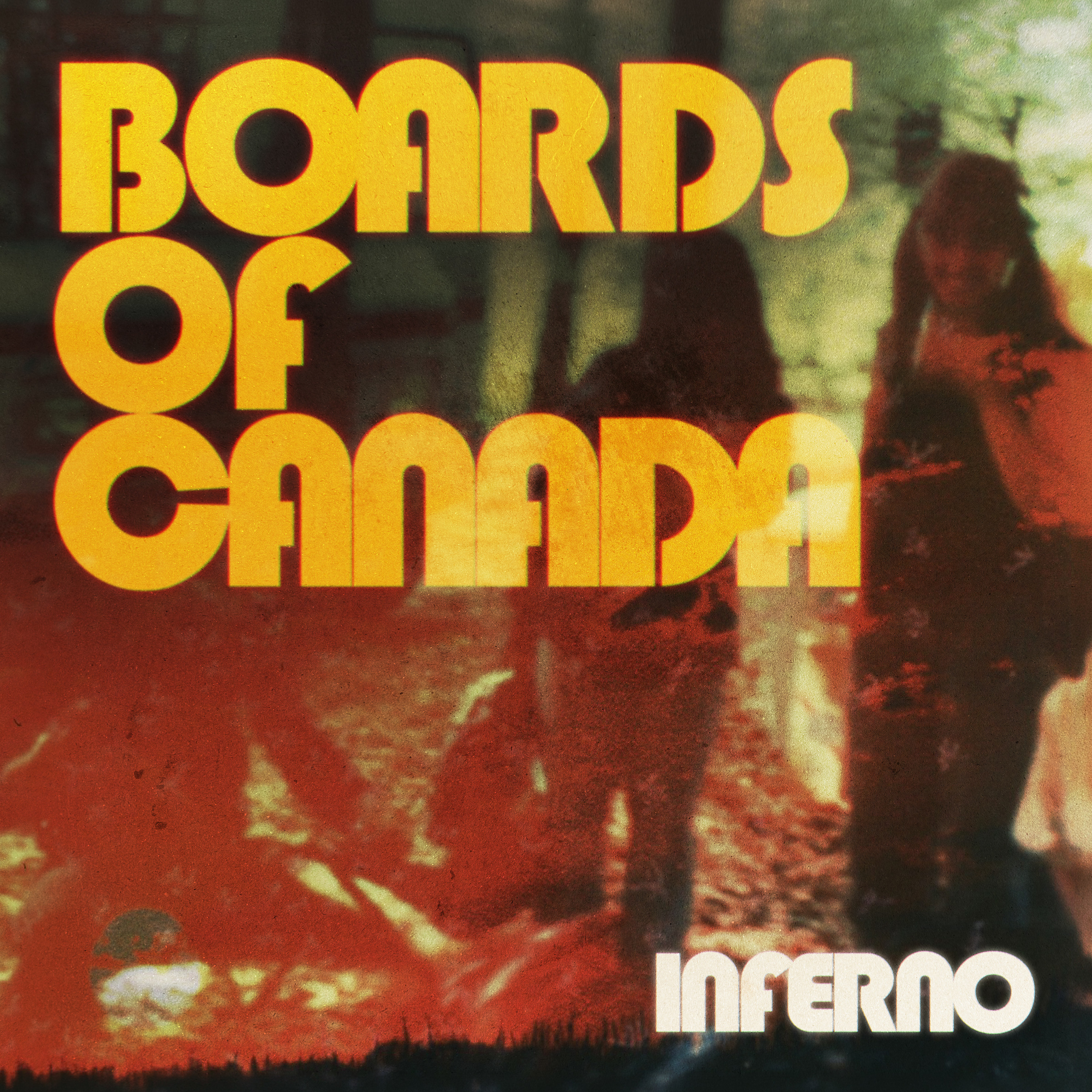
Sometimes, the most deeply ingrained truths are the lies you believe in hard enough. A lie held close enough to your soul, a good one, one that organizes your perception of your existence, comforting and consoling you and explaining everything, can rewrite reality. It allows for truly amazing amounts of exploitation, overruling your brain with cult mentalities and driving you further and further away from yourself as long as you can maintain some sort of complacence. The only question is, how far can it stretch before it snaps? Inferno, the long, long-awaited return of Boards of Canada, imagines a lie taken to and beyond the grave.
A new Boards of Canada album felt, for the longest time, like a fantasy almost equally comparable to wishing they’d have live shows again. I had already made peace with Tomorrow’s Harvest being their final ghostly obliteration/goodbye. To say this is a shock is an understatement. With 13 years to spare (just over half of my lifetime!) in between releases, though… why did it take so long? Why do Mike and Marcus re-emerge now? What good ideas came to their minds that were not apparent previously? And where the hell are they going to take a sound that, though consistently restless and ever-changing, always carried an exact, ominous, off-putting throughline that let you know who exactly was guiding the show?
The new sonic direction on Inferno is unexpected: right to the front of the stage. This thing feels larger and louder than Boards of Canada have ever sounded before. Live instrumentation and a heavier emphasis on vocal samples build out their sound directly in the foreground, from surreal dialogue splices to group chants and some seriously pretty guitar tones that, at times, ring almost gothic. The fuzz is still there in droves, of course, but it’s the most front-and-center we’ve had these guys since “Dayvan Cowboy.” If their prior albums were on degraded tapes, Inferno feels like getting up from the television and actually looking outside.
The end result feels like a great reflection on the life you never had and what could have been after the end. You do die, here, unfortunately. However, the look back appears stunning from this angle. Many of the album’s highlights are its most peaceful, calm moments, where Inferno slips back the most into the classic sound the brothers are beloved for. “Deep Time” and “Age of Capricorn” are easily able to drive weaker souls (see: the writer) to tears. They’re masterfully painted landscapes expressed through a blend of fragile synthwork and those near-Campfire-style acoustics that might just be able to deliver you unto St. Peter all by themselves.
These are contrasted with easily the darkest songs the brothers have released to date. When this album gets loud, it’s urgent, with a directness that feels out of left-field. It’s a dissonance that never lets you fully sit back, always forcing you to dart your eyes around as you notice everything that isn’t quite fully right with this picture. This newfound, clear, holy darkness sets the tone through “Prophecy at 1420 MHz” and never lets go, coming in and out of focus, merging with what should be otherwise bright tracks like “Blood in the Labyrinth.” It feels like a poisoning of what should have been a straightforward somber introspection. When you do finally and completely vaporize, it has to come with the final two tracks laying you down in devastating fashion. “You Retreat in Time and Space” is an all-time highlight, and the most gorgeous Boards of Canada has ever sounded, especially outside of The Campfire Headphase. Its warping, sunny synths give way to “I Saw Through Platonia,” a still warm yet sparse finale that draws out your heartbeat, gives you a few more moments… and then lets it stop.
It’s a powerful experience, but with the added cultish context instilled throughout the album’s rollout and baked into the bones of its sampling, Inferno gains new menace. The revelation turns the album inside out. Those levitating warm ambient passages curdle under the blanket of deceit. The chanted vocals and ascendant synths desperately hide the rot. It’s the warm hand of the one you look up to, cupping your face, telling you it’s going to be okay as the compound catches fire. Only in the afterlife do you see the reality behind the pall that should have crashed in at some point. The life you never had becomes a life that was denied to you. It was an existence you could not have had, held by impermeable barriers you never knew were there. It's a joy, a total freedom you only experience now, at peace. And so you rest.
Inferno’s existence felt like a miracle, but now it feels like it was always inevitable. We live in a burning, ending world filled with easily exploitable people, where cult dynamics feel utterly pervasive and the only variable is how much you’re willing to stretch your own denial of what’s right in front of you. Our world is filled with lives that were denied to us. Deeply-ingrained delusion is now just part of the deal. Whereas Tomorrow’s Harvest imagined an ending in the past, cold and scattered, and brought it to the present, Inferno just feels like what’s going to happen now. It’s beautiful, ethereal and ghostly… and, fuck, does it scare me.
just as was told